よむ、つかう、まなぶ。

資料3-6 コルヒチンの安全対策のための製造販売承認事項一部変更承認について[1.7MB] (16 ページ)
出典
| 公開元URL | https://www.mhlw.go.jp/stf/newpage_73884.html |
| 出典情報 | 薬事審議会 医薬品等安全対策部会(令和8年度第1回 6/18)《厚生労働省》 |
ページ画像
ダウンロードした画像を利用する際は「出典情報」を明記してください。
低解像度画像をダウンロード
プレーンテキスト
資料テキストはコンピュータによる自動処理で生成されており、完全に資料と一致しない場合があります。
テキストをコピーしてご利用いただく際は資料と付け合わせてご確認ください。
1064
TERKELTAUB ET AL
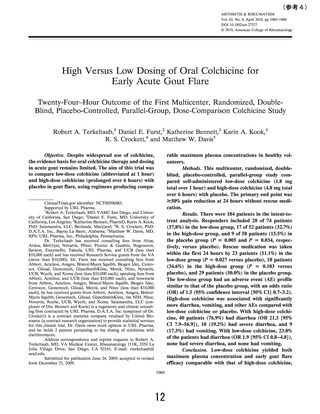
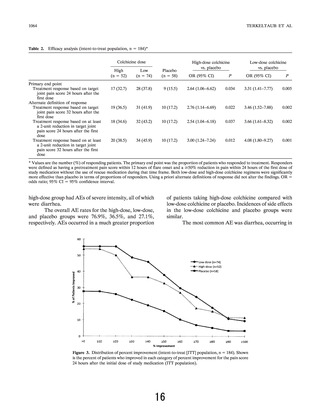
Table 2. Efficacy analysis (intent-to-treat population, n ⫽ 184)*
Colchicine dose
Primary end point
Treatment response based on target
joint pain score 24 hours after the
first dose
Alternate definition of response
Treatment response based on target
joint pain score 32 hours after the
first dose
Treatment response based on at least
a 2-unit reduction in target joint
pain score 24 hours after the first
dose
Treatment response based on at least
a 2-unit reduction in target joint
pain score 32 hours after the first
dose
High-dose colchicine
vs. placebo
Low-dose colchicine
vs. placebo
High
(n ⫽ 52)
Low
(n ⫽ 74)
Placebo
(n ⫽ 58)
OR (95% CI)
P
OR (95% CI)
P
17 (32.7)
28 (37.8)
9 (15.5)
2.64 (1.06–6.62)
0.034
3.31 (1.41–7.77)
0.005
19 (36.5)
31 (41.9)
10 (17.2)
2.76 (1.14–6.69)
0.022
3.46 (1.52–7.88)
0.002
18 (34.6)
32 (43.2)
10 (17.2)
2.54 (1.04–6.18)
0.037
3.66 (1.61–8.32)
0.002
20 (38.5)
34 (45.9)
10 (17.2)
3.00 (1.24–7.24)
0.012
4.08 (1.80–9.27)
0.001
* Values are the number (%) of responding patients. The primary end point was the proportion of patients who responded to treatment. Responders
were defined as having a pretreatment pain score within 12 hours of flare onset and a ⱖ50% reduction in pain within 24 hours of the first dose of
study medication without the use of rescue medication during that time frame. Both low-dose and high-dose colchicine regimens were significantly
more effective than placebo in terms of proportions of responders. Using a priori alternate definitions of response did not alter the findings. OR ⫽
odds ratio; 95% CI ⫽ 95% confidence interval.
high-dose group had AEs of severe intensity, all of which
were diarrhea.
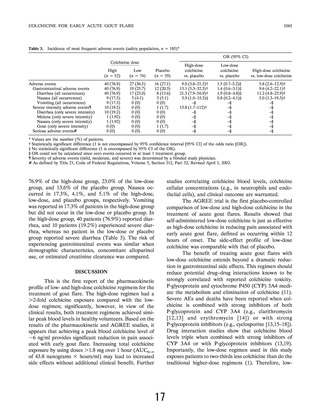
The overall AE rates for the high-dose, low-dose,
and placebo groups were 76.9%, 36.5%, and 27.1%,
respectively. AEs occurred in a much greater proportion
of patients taking high-dose colchicine compared with
low-dose colchicine or placebo. Incidences of side effects
in the low-dose colchicine and placebo groups were
similar.
The most common AE was diarrhea, occurring in
Figure 3. Distribution of percent improvement (intent-to-treat [ITT] population, n ⫽ 184). Shown
is the percent of patients who improved in each category of percent improvement for the pain score
24 hours after the initial dose of study medication (ITT population).
16
TERKELTAUB ET AL
Table 2. Efficacy analysis (intent-to-treat population, n ⫽ 184)*
Colchicine dose
Primary end point
Treatment response based on target
joint pain score 24 hours after the
first dose
Alternate definition of response
Treatment response based on target
joint pain score 32 hours after the
first dose
Treatment response based on at least
a 2-unit reduction in target joint
pain score 24 hours after the first
dose
Treatment response based on at least
a 2-unit reduction in target joint
pain score 32 hours after the first
dose
High-dose colchicine
vs. placebo
Low-dose colchicine
vs. placebo
High
(n ⫽ 52)
Low
(n ⫽ 74)
Placebo
(n ⫽ 58)
OR (95% CI)
P
OR (95% CI)
P
17 (32.7)
28 (37.8)
9 (15.5)
2.64 (1.06–6.62)
0.034
3.31 (1.41–7.77)
0.005
19 (36.5)
31 (41.9)
10 (17.2)
2.76 (1.14–6.69)
0.022
3.46 (1.52–7.88)
0.002
18 (34.6)
32 (43.2)
10 (17.2)
2.54 (1.04–6.18)
0.037
3.66 (1.61–8.32)
0.002
20 (38.5)
34 (45.9)
10 (17.2)
3.00 (1.24–7.24)
0.012
4.08 (1.80–9.27)
0.001
* Values are the number (%) of responding patients. The primary end point was the proportion of patients who responded to treatment. Responders
were defined as having a pretreatment pain score within 12 hours of flare onset and a ⱖ50% reduction in pain within 24 hours of the first dose of
study medication without the use of rescue medication during that time frame. Both low-dose and high-dose colchicine regimens were significantly
more effective than placebo in terms of proportions of responders. Using a priori alternate definitions of response did not alter the findings. OR ⫽
odds ratio; 95% CI ⫽ 95% confidence interval.
high-dose group had AEs of severe intensity, all of which
were diarrhea.
The overall AE rates for the high-dose, low-dose,
and placebo groups were 76.9%, 36.5%, and 27.1%,
respectively. AEs occurred in a much greater proportion
of patients taking high-dose colchicine compared with
low-dose colchicine or placebo. Incidences of side effects
in the low-dose colchicine and placebo groups were
similar.
The most common AE was diarrhea, occurring in
Figure 3. Distribution of percent improvement (intent-to-treat [ITT] population, n ⫽ 184). Shown
is the percent of patients who improved in each category of percent improvement for the pain score
24 hours after the initial dose of study medication (ITT population).
16